How to manage indexes in MongoDB using pymongo in Python

How to manage indexes in MongoDB using pymongo in Python

Monitoring index performance in MongoDB is vital for database efficiency. Use commands like `db.collection.aggregate()` with `$indexStats` and `db.collection.stats()` to assess index usage and size. Implement partial indexes for improved performance and reduced overhead. Regular evaluation ensures optimal indexing strategies align with evolving data access patterns.

How to use recurrent layers with torch.nn in PyTorch

How to use recurrent layers with torch.nn in PyTorch

Optimizing recurrent networks involves effective initialization techniques like Xavier and He initialization to maintain weight variance. Implementing learning rate schedulers in PyTorch, such as StepLR, enhances convergence. Regularization methods, batch normalization, and GPU utilization are crucial for improving model performance and training speed.
How to understand and use data types in NumPy with numpy.dtype in Python

How to understand and use data types in NumPy with numpy.dtype in Python

Performance optimization in NumPy hinges on selecting appropriate data types that align with hardware capabilities. Utilizing 8-bit integers instead of 64-bit can reduce cache misses and enhance CPU register use. Employing np.float32 over np.float64 minimizes memory usage while maintaining sufficient precision, critical for large-scale data operations and machine learning tasks.
How to optimize neural networks with Keras optimizers in Python

How to optimize neural networks with Keras optimizers in Python

Tuning hyperparameters is crucial for optimizing model performance in machine learning. Key settings include learning rate, batch size, epochs, and dropout rate. Techniques like learning rate schedulers, early stopping, and automated search methods such as Optuna can enhance training outcomes. Effective hyperparameter tuning leads to improved model accuracy.
How to deploy models using TensorFlow Serving in Python

How to deploy models using TensorFlow Serving in Python

Setting up a model for deployment in TensorFlow Serving involves configuring and packaging it in the TensorFlow SavedModel format. Properly defined input and output signatures ensure accurate request interpretation. Effective model version management is essential, allowing seamless updates. Implementing a health check endpoint helps monitor server readiness for predictions.
How to create symbolic links using os.symlink in Python

How to create symbolic links using os.symlink in Python

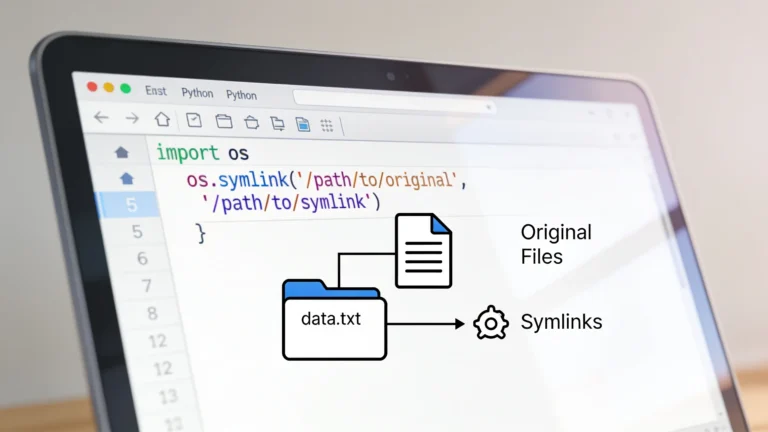
The os.symlink function in Python creates symbolic links with a target path and a link path. This guide covers creating symlinks, checking for existing links, and generating relative symlinks. Additionally, it explains how to verify a symlink's target using os.readlink for debugging purposes. Ideal for Python developers working with file systems.